

High-Performance Computing Servers for AI, Simulation & Data-Intensive Workloads
High-Performance Computing (HPC) servers are built to process large, complex workloads that exceed the capabilities of standard enterprise servers. These systems are used in artificial intelligence, scientific computing, engineering simulation, computational chemistry, weather modeling, genomics, financial modeling, rendering, and other data-intensive applications where processing speed, memory bandwidth, accelerator support, and system scalability are critical.
Organizations comparing HPC servers, GPU servers, compute servers, high-density servers, AI servers, and used high-performance computing systems should evaluate CPU architecture, GPU or accelerator support, memory capacity, storage, interconnects, power requirements, cooling, rack density, and software compatibility. A standard dual-socket server may be sufficient for many CPU-heavy workloads, while AI training, deep learning, and advanced simulation often require multiple high-performance GPUs connected through high-bandwidth interconnects. Choosing the right HPC platform can reduce processing time, improve utilization, and make it easier to scale demanding workloads.
What Is a High-Performance Computing Server?

An HPC server is a server designed for computationally intensive workloads that require more processing power, memory bandwidth, or parallelism than traditional business applications. These systems may use high-core-count CPUs, multiple GPUs, large memory configurations, high-speed storage, and specialized networking to solve large problems more quickly. Unlike standard application servers, HPC systems are typically optimized around sustained computational performance rather than general office, web, or file-serving workloads.
HPC servers are often deployed individually for smaller workloads or grouped into clusters where many systems work together on the same problem. In a cluster, high-speed networking and workload-management software allow computing tasks to be distributed across multiple nodes. The result is a scalable computing environment that can support anything from engineering simulations to large AI models. Buyers should also consider whether their software scales efficiently across multiple servers, because adding more hardware does not always produce proportional performance gains.
CPU-Based HPC Servers
Traditional CPU-based HPC servers rely on high-core-count processors from families such as AMD EPYC and Intel Xeon. These systems are commonly used for scientific modeling, finite element analysis, computational fluid dynamics, electronic design automation, financial calculations, and applications that depend heavily on general-purpose CPU performance. CPU-based platforms can also be attractive for workloads that are poorly optimized for GPUs or require large amounts of system memory.
CPU configuration should be matched to the software being used because some workloads benefit from more cores while others depend on higher clock speeds, large cache, or memory bandwidth. Memory capacity can also become a limiting factor in large simulations or datasets. When purchasing an HPC server, buyers should review both processor generation and memory architecture rather than focusing only on total core count. NUMA layout, memory channel population, and supported RAM speeds can all affect real-world performance in multi-socket systems.
GPU-Accelerated HPC Servers
GPU servers have become increasingly important in HPC because GPUs can process large numbers of calculations in parallel. They are widely used for AI training, machine learning, molecular modeling, scientific simulation, rendering, computational imaging, and other workloads that can take advantage of massively parallel processing. In many of these applications, a properly configured GPU server can dramatically reduce processing time compared with CPU-only hardware.
A GPU-accelerated HPC server may contain several high-end accelerators in one chassis, along with powerful CPUs, large memory capacity, and high-speed interconnects. Platforms using NVIDIA H100, H200, A100, or other data-center accelerators are common in AI and scientific computing, while AMD Instinct accelerators are also used in large HPC environments. Power delivery and cooling become major purchasing considerations because multi-GPU systems can consume significantly more power than conventional servers. Buyers should also verify PCIe lane availability, accelerator form factor, and supported interconnect technology before purchasing a chassis for future GPU expansion.
HPC Servers for AI and Machine Learning
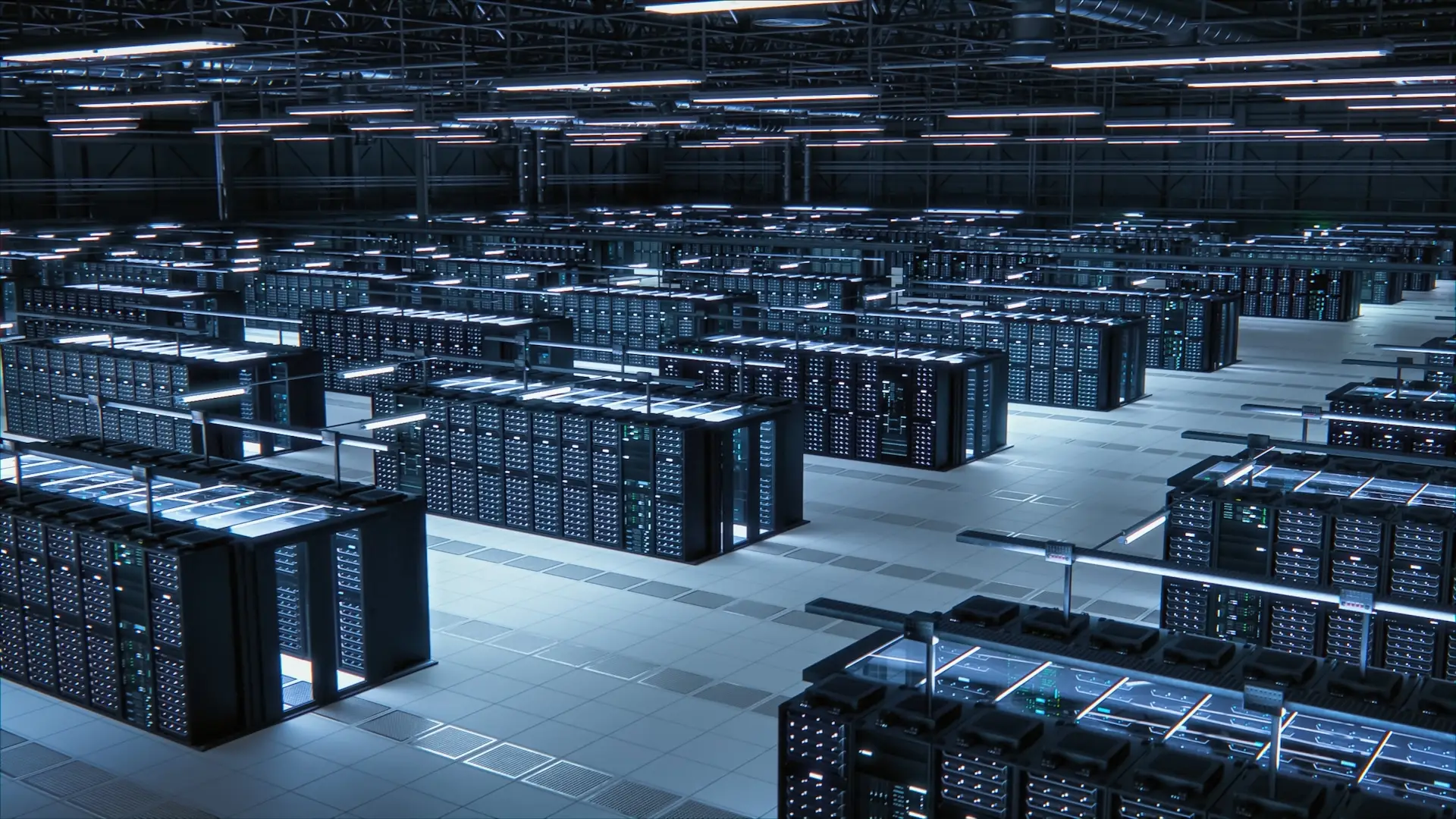
Modern AI infrastructure increasingly overlaps with traditional HPC. Training large neural networks requires high-performance GPUs, fast memory, large datasets, and low-latency communication between accelerators. This has made GPU-dense HPC servers a core component of AI data centers, research laboratories, and enterprise machine-learning environments. The same hardware may also support model fine-tuning, inference, computer vision, generative AI, and scientific machine-learning workloads.
AI workloads also place heavy demands on networking and storage. Large training jobs may need to move data continuously between storage arrays, compute nodes, and accelerators, making high-speed Ethernet or InfiniBand an important part of the system. Buyers evaluating used AI servers should therefore consider the entire compute stack rather than treating the GPU chassis as an isolated purchase. Software compatibility is equally important, including supported CUDA or ROCm environments, driver versions, operating systems, and framework requirements.
Memory, Storage & Data Throughput
HPC applications often move enormous amounts of data through memory and storage, so memory bandwidth and storage performance can be just as important as raw processor speed. Large scientific simulations, genomic datasets, AI training sets, and engineering models may require hundreds of gigabytes or even terabytes of system memory. If available memory is insufficient, the workload may be forced to use slower storage, which can significantly reduce performance.
Local NVMe storage can provide fast access to frequently used datasets, scratch space, and model checkpoints, while larger HPC environments often connect to shared high-performance storage. PCIe generation, NVMe drive count, RAID or software-defined storage configuration, and network throughput can all affect real-world performance. A server with powerful CPUs or GPUs can remain underutilized if data cannot reach the processors quickly enough. Buyers should therefore evaluate I/O architecture, not just processor and accelerator specifications.
HPC Networking & Cluster Interconnects
When multiple servers operate as an HPC cluster, the network connecting them becomes critical. InfiniBand and high-speed Ethernet are commonly used to provide low-latency, high-throughput communication between compute nodes. Applications that frequently exchange data between servers can suffer significant performance losses when network latency is too high. This is especially important for distributed AI training, large simulations, and tightly coupled scientific workloads.
Modern HPC clusters may use 100G, 200G, 400G, or faster networking depending on workload and scale. Network adapters, switches, transceivers, cables, and topology all contribute to overall cluster performance. Facilities building or expanding an HPC environment should plan compute and networking together rather than selecting servers first and treating connectivity as an afterthought. Compatibility between network adapters, switch ports, optics, and software drivers should also be confirmed when sourcing used equipment.
Cooling, Power & Rack Density
High-performance computing servers can generate substantial heat, particularly when several GPUs or high-TDP CPUs are installed in a compact chassis. Standard air cooling may be adequate for some configurations, while dense GPU systems may require high-capacity airflow or liquid cooling. Data center cooling capability should therefore be reviewed before adding high-density compute equipment. Inadequate cooling can reduce performance through thermal throttling and may shorten component life.
Power requirements can also be significant. A single multi-GPU server may require several kilowatts, and a rack of HPC systems can place major demands on power distribution and facility infrastructure. Buyers should verify power supply ratings, input voltage, rack PDU capacity, redundancy, and cooling before purchasing hardware that exceeds the capabilities of the existing data center. Chassis depth, rack weight, airflow direction, and available circuit capacity should also be checked before installation.
Common Applications for HPC Servers
High-performance computing systems are used across science, engineering, AI, and enterprise environments.
Common applications include:
-
Artificial intelligence and deep learning
-
Engineering simulation
-
Computational fluid dynamics
-
Finite element analysis
-
Molecular modeling
-
Genomics and bioinformatics
-
Weather and climate modeling
-
Computational chemistry
-
Rendering and visualization
-
Financial modeling
-
Electronic design automation
-
Scientific research
The right server configuration can vary significantly between these applications. AI training may require several powerful GPUs, while a simulation workload may benefit more from CPU cores and memory bandwidth. Understanding the software and workload profile before purchasing hardware helps avoid expensive over- or under-configuration.
What to Consider When Purchasing an HPC Server
When purchasing a used HPC server, the first step is determining whether the workload is CPU-, GPU-, memory-, storage-, or network-bound. This prevents buyers from paying for expensive accelerators or processors that will not improve the actual application.
Important considerations include:
-
CPU model and core count
-
GPU or accelerator support
-
GPU quantity and model
-
System memory capacity
-
Memory bandwidth
-
PCIe generation and lane availability
-
NVMe and storage capacity
-
Network adapters
-
InfiniBand or high-speed Ethernet support
-
Power supply configuration
-
Cooling requirements
-
Rack size and chassis depth
-
Firmware and management software
-
Overall hardware condition
Used HPC equipment should also be inspected for accelerator health, fan condition, power supply status, drive wear, DIMM errors, and management-controller logs. Complete systems with rails, risers, GPU cables, network adapters, and power supplies can offer much better value than incomplete chassis that require difficult-to-source components.
Popular HPC Server Platforms

NVIDIA DGX Systems – Among the most recognizable GPU-accelerated computing platforms for AI and HPC. DGX systems combine multiple NVIDIA data-center GPUs with high-bandwidth interconnects and optimized software, making them popular for AI training, research, and large-scale accelerated computing.
Dell PowerEdge XE Series – High-density servers designed for GPU acceleration, AI, and advanced computing workloads. Dell XE platforms are commonly found in enterprise data centers, research environments, and organizations deploying multi-GPU compute infrastructure.
HPE Cray and Apollo HPC Platforms – HPE offers scalable HPC systems ranging from dense compute servers to large supercomputing architectures. Apollo and Cray platforms are widely used for scientific computing, simulation, AI, and research workloads.
Supermicro GPU SuperServer Platforms – Popular GPU-dense servers available in a broad range of chassis, CPU, accelerator, storage, and networking configurations. Supermicro systems are frequently used by AI startups, research institutions, cloud providers, and custom HPC integrators.
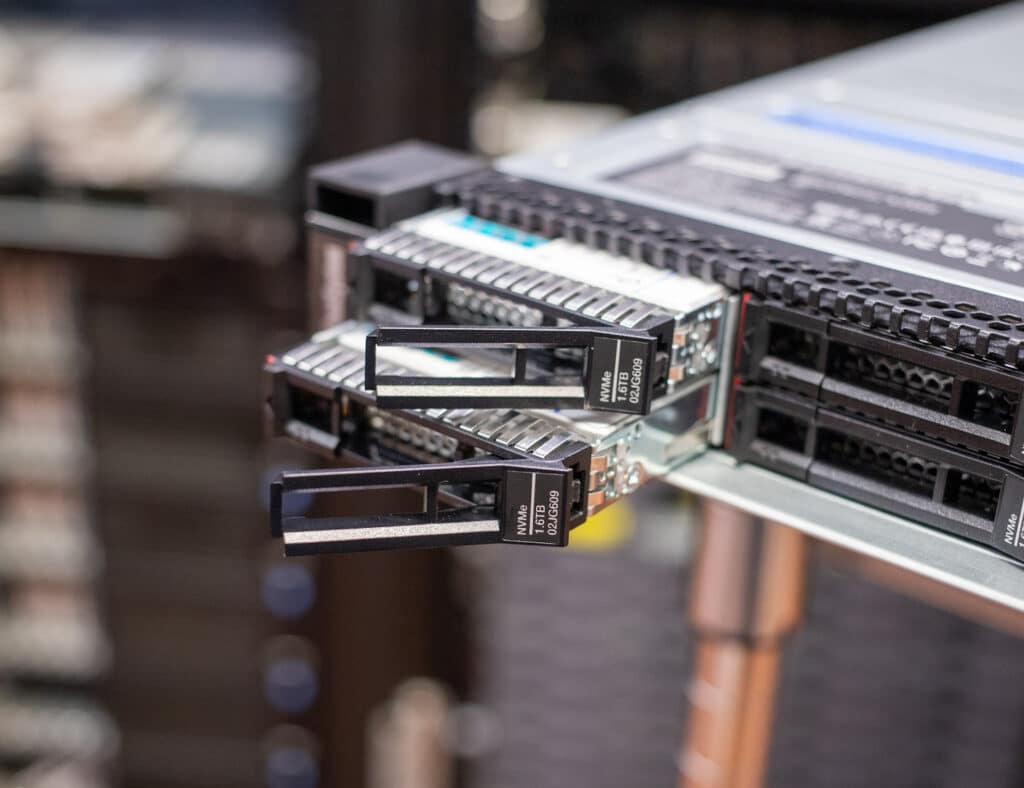
Lenovo ThinkSystem SD and SR Series – High-density compute platforms used in enterprise HPC, AI, engineering, and research applications. Lenovo HPC systems support a variety of CPU, GPU, memory, and networking configurations.
Gigabyte G-Series GPU Servers – High-density GPU platforms used for AI, deep learning, rendering, and scientific computing. These systems are common in organizations seeking multi-GPU capability with flexible accelerator and storage options.
Why Used HPC Servers Can Offer Strong Value
New HPC servers and GPU compute systems can be extremely expensive, especially when high-end accelerators, large memory configurations, NVMe storage, and high-speed networking are included. Used and refurbished systems can offer access to substantial compute capability at a lower capital cost, making them attractive for research labs, universities, AI startups, engineering companies, and organizations building development or inference environments.
Used HPC hardware can be especially valuable when the workload does not require the newest accelerator generation. Previous-generation GPU and CPU platforms may still deliver excellent performance for simulation, research, inference, rendering, and many machine-learning tasks. A complete used system with GPUs, memory, storage, rails, and network hardware can therefore provide far greater practical value than purchasing new components individually.
Choosing the Right HPC Platform
The best high-performance computing server depends on the workload, software stack, scale, and infrastructure available. CPU-heavy scientific applications should prioritize processor architecture and memory bandwidth, while AI and parallel workloads may benefit more from GPU density and accelerator interconnects. Storage and networking should be sized so they do not become bottlenecks once the compute hardware is fully utilized.
Facilities should also consider future expansion. A system that supports additional GPUs, memory, high-speed network adapters, or NVMe storage may provide better long-term value than a platform already operating at its maximum configuration. By comparing compute performance, accelerator support, memory, storage, networking, power, cooling, and overall condition, organizations can select HPC servers that deliver strong performance without overspending on unnecessary hardware.
Looking for HPC Servers & AI Computing Hardware?
Explore our inventory of used HPC servers, GPU servers, AI compute systems, high-speed networking equipment, and data center hardware, or consign surplus computing equipment to connect with qualified buyers.
Visit us at ProTechSupply.com
📦 Worldwideshipping available